24 Sandy Lane, Lower Darwen, Darwen, BB3 0PU, United Kingdom
7 tiling mistakes and how to avoid them
1. Poor substrate preparation
The substrate is the surface which the tiles go onto. It needs to be prepared carefully so that the adhesive and tiles can be laid properly.
As Renforth puts it: “if you start with the right foundations, you’ll get the right outcomes. So, if the wall isn’t flat, it should be plastered to be made as flat and plumb as possible, while uneven floorboards should be removed and replaced.”
Make sure the substrate is clean, dry and free of dust and debris before you apply adhesive. If you fail to do this, it might struggle to stick.
2. Using the wrong laying pattern
Naturally, you’ll want to set out your tiles in a laying pattern that you find visually pleasing. However, it’s sometimes overlooked that certain shapes of tiles can be laid more neatly in certain layouts.
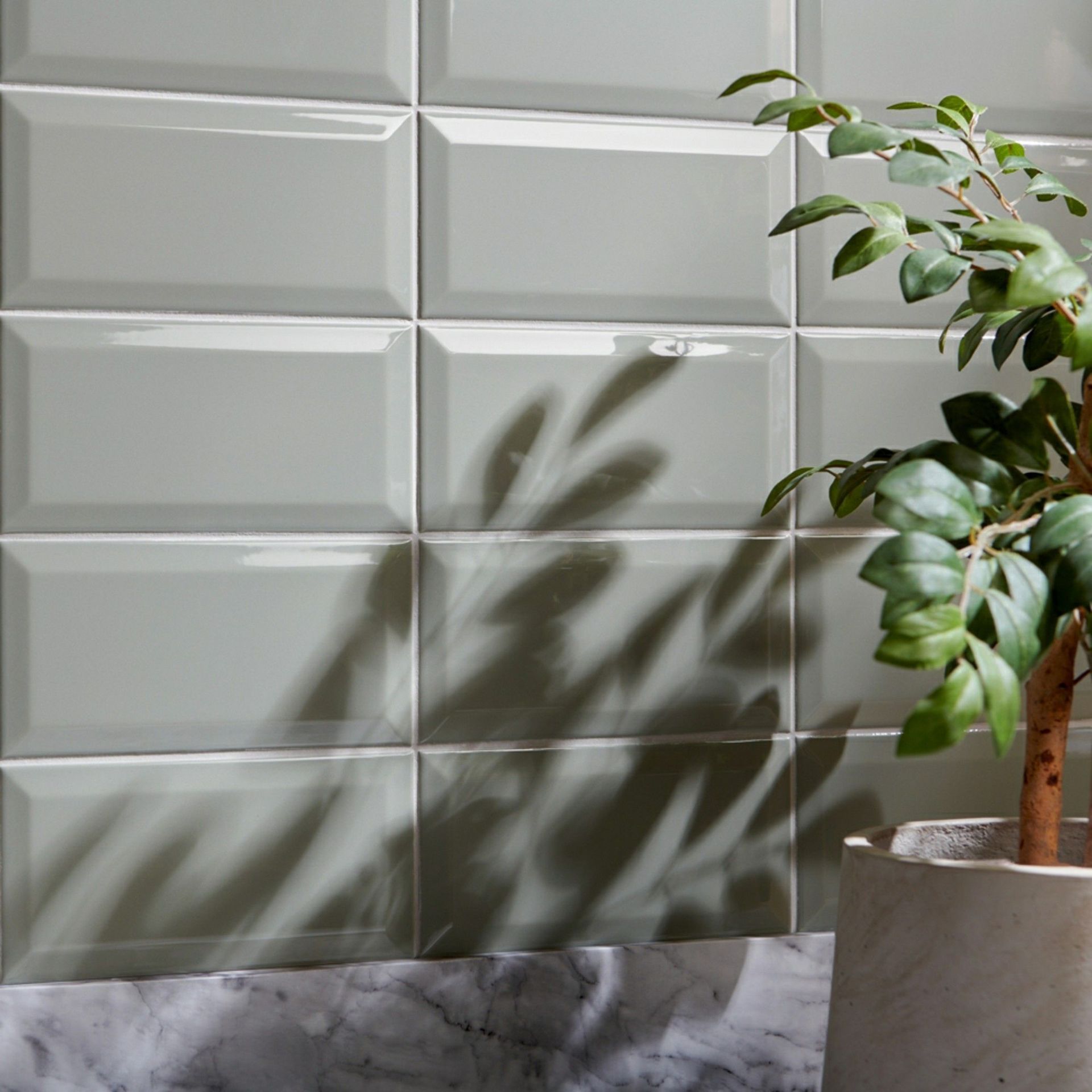
For instance, with rectangular ‘brick tiles’, choosing the wrong layout may lead to ‘lippage's’, where the edge of one tile protrudes over the edge of another.
“I’ve seen a lot of customers laying these tiles on a half bond [with the pattern for each row starting half a tile offset from the previous row], but a lot of manufacturers are now saying to use a third bond [one third of a tile offset] so you don’t get any lippage's,” says Pino Mazzafiore of Terranean Tiles.
3. Using ready-mix adhesive for bathroom tiles
Tile adhesives come in various types, and the best one to use depends on the project specifics. Using a poorly suited type could lead to failed adhesion and cracked or broken tiles.
“A lot of people use a ready-mixed adhesive, which is an easy option but shouldn’t be used in a bathroom as it is not waterproof,” says Renforth. “If you use it in this room and a fitting starts to leak, or if silicone has been applied incorrectly, then the tile will fail and come off quicker.
“To tile a bathroom, you should use a standard-set adhesive that you’d mix with a drill and paddle.”
4. Choosing a poorly matched grout
You might be surprised at the range of grout colours available at specialist tile showrooms. Choosing the right shade and formulation matters to the finished look of your tiling.
“Long gone are the days of using white grout with every tile,” says Mazzafiore. “The trend we’re seeing at the moment is using a grout that’s the same colour as the tiles. Colour matching creates a flawless look.”
It’s also important to mix your chosen grout carefully. “Make sure you mix it in the same ratio from one wall to the next,” Mazzafiore advises. “For example, if you’re doing 2:1 grout and water, keep that consistent so the colour of the grout will be the same on each wall.”
If tiling a bathroom or another wet space, we would recommend using a water-resistant grout.
5. Skipping the decoupling membrane (in some cases)
According to Renforth, you don’t always need to use a decoupling membrane – but for some tiled floors, it’s essential. This layer of material limits the motion transfer between a flexible substrate (such as wood or screed) and the tiles above. Without this membrane, excessive movement can cause cracks, delamination (the tiles come unstuck), and cracked or crumbling grout.
“A decoupling membrane is important on new screeds and over new underfloor heating systems which might be covered with a tongue-and-groove cement board,” says Renforth. “It’s only needed where movement beneath floor tiles is likely; not on every single install.”
6. Neglecting waterproof tanking in the bathroom
Before a professional tiler tiles a bathroom, they will protect the wall and floor surfaces with a waterproof membrane. This process of ‘waterproof tanking’ is strongly recommended for wet spaces by the British Standards Institute – and by Renforth.
“Shower areas in particular should be waterproof tanked,” he says. “The surface preparation for a shower costs around £50-60. You paint it on, you seal it, and it adds 10-15 years of life to your bathroom.
“For the sake of saving that money, your bathroom could leak, your ceiling could cave in and you could end up having to redo the bathroom.”
7. Not making enough allowance for wastage
Most DIYers understand that they need to buy a greater quantity of tiles than they would need to perfectly fill the required dimensions. This allows for wastage of tile area that will happen when you cut edge pieces for the boundaries of the tiled area. Nonetheless, it’s easy to buy too few.
“My advice is that you should always allow 20% wastage,” says Mazzafiore. “If you try to save money by getting only 10% extra, you might not have enough tiles for the job, depending on the cuts required. If you find yourself one box short, there’s no guarantee that the supplier will still be making the same tiles.
“When you’re buying a job lot of tiles online, make sure the seller has accounted for the wastage,” he adds.
All credit to this article and put together by https://www.homebuilding.co.uk/diy/tiling-mistakes